
Behind the Access | Meet our Access Programme users

Behind the Access: Turning Access Opportunities into Research Impact

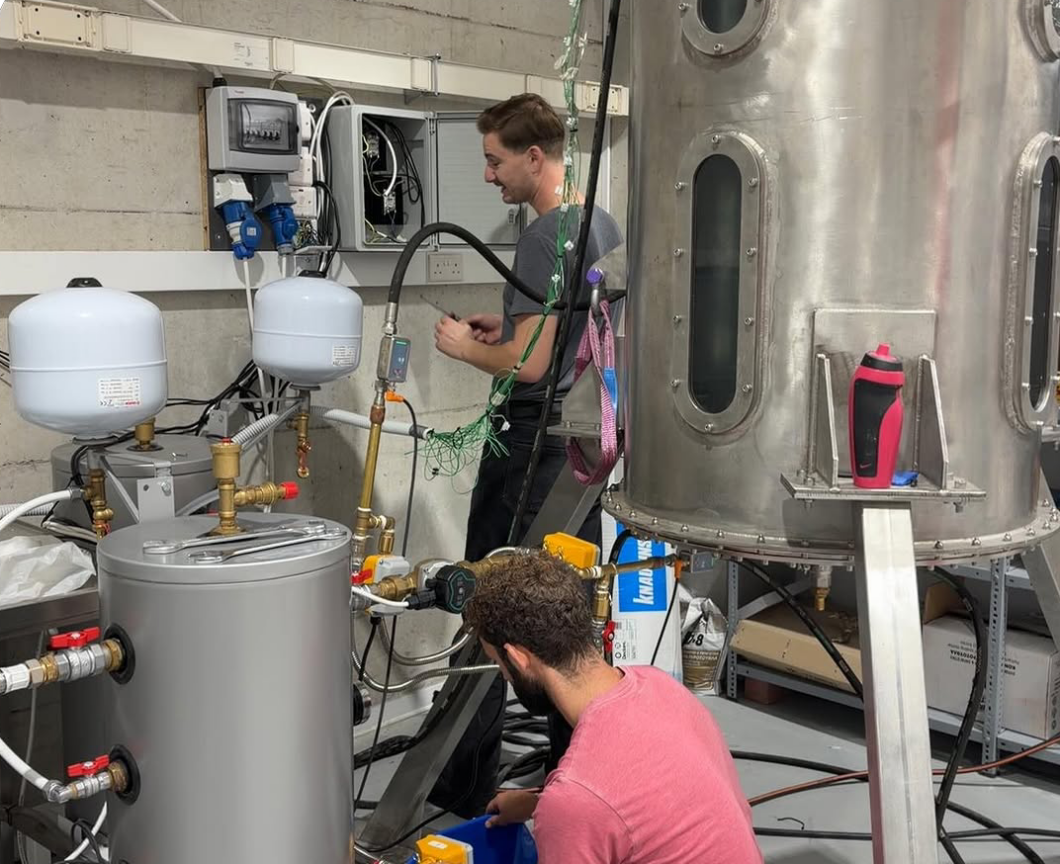
Nikos and Constantinos setting up the experiments
Nikolaos Christodoulou, Centre for Research and Technology Hellas (CERTH) and Konstantinos Ilia The Cyprus Institute (CYI) setting up the experiments, at CYI facilities.


Launched in May 2026, the EU-SOLARIS ERIC Access Programme is already delivering on its goal of opening up access to specialised research infrastructures and services for the solar thermal community.

With the first accesses successfully completed, we are delighted to share the experiences of the researchers who have taken part in the programme. Through this series, Behind the Access, we will highlight their work, the opportunities provided by the programme and the impact of accessing specialised facilities on their research.

In this first interview, we hear from Nikolaos Christodoulou, research engineer at the Centre for Research and Technology Hellas (CERTH), who shares their experience and insights from their recent access to The Cyprus Institute (CYI) facilities.

Meet the Researcher Behind the Access

EU-Solaris - Imagen1 scaled e1794322713513
  • Name: Nikolaos Christodoulou

  • Position: Research Engineer at the Centre for Research and Technology Hellas (CERTH), Thessaloniki, Greece; PhD candidate in the Chemical Engineering Faculty, of the Aristotle University of Thessaloniki and member of the ARTEMIS (Advanced Renewable Technologies & Environmental Materials in Integrated Systems) Laboratory, which is part of the Chemical Process and Energy Resources Institute (CPERI) at CERTH.

  • Main Research Area: Biofuel production through solar-assisted thermochemical processes.

  • Main Responsibilities: Planning and execution of Hydrothermal Liquefaction (HTL) experimental campaigns, which aim to contribute to the production of next-generation, zero-emission fuels.

“The main achievement was the successful completion of the small-scale experimental investigation and the collection of comparative temperature data.”


What was the main objective of your research project, and what specific challenge were you aiming to address?

During this project, I worked in collaboration with the research team at the Cyprus Institute (CYI), which has significant expertise and experimental capabilities in advanced thermal energy storage. The main objective of the project was to experimentally investigate an innovative approach to improving thermal stratification in thermocline thermal energy storage systems. 

Thermocline systems store hot and cold thermal energy within a single storage tank, making them an attractive alternative to conventional two-tank configurations. However, one of their main challenges is maintaining a stable temperature gradient between the hot and cold regions. Heat transfer and fluid mixing can gradually weaken this gradient, reducing the effective thermal performance of the system. Our research aimed to investigate whether specially designed thermal storage elements could help preserve this temperature gradient and delay thermal homogenization, ultimately contributing to more efficient and compact thermal energy storage solutions.


Which EU-SOLARIS Research Infrastructure did you access, and what activities or experiments did you carry out during your visit?

During the two-week access, I worked at the research facilities of the thermal energy storages of the CYI. The experimental activities focused initially on a small-scale water-based storage system.

Two configurations were investigated under comparable initial and boundary conditions: a reference configuration without the investigated elements and a second configuration incorporating them. Temperature measurements were collected at three different vertical positions using thermocouples, while visual observations were also used to assess the formation and evolution of the thermal layers. The experimental data were recorded through a LabVIEW-based acquisition system and subsequently processed for comparison and analysis. A larger-scale experimental campaign using a 3,000 L storage tank was also planned as the next stage of the visit. However, due to time limitations and modifications that had to be done based on the initial results, this part could not be completed.
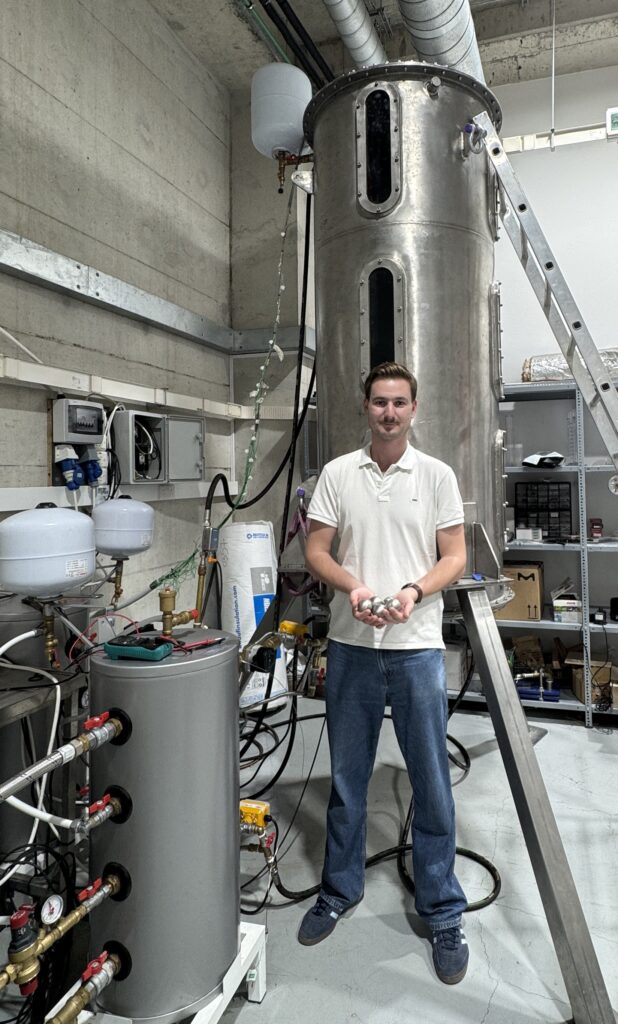
EU-Solaris - The particles and the 3000 L tankThe particles and the 3000 L tank


Why did you choose this particular Research Infrastructure?

I selected the Cyprus Institute because of its specialized research activities in thermal energy storage and its experience in experimental investigation of thermocline systems. The available facilities, measurement equipment and technical expertise were particularly relevant to the objectives of my project. 

Access to an established experimental research environment allowed me to investigate my concept under controlled conditions and obtain experimental data that would have been difficult to generate within the same timeframe using the CERTH facilities. 

Furthermore, the opportunity to work directly with researchers at CYI provided valuable technical exchange and the possibility of identifying future research directions.


 What were the main outcomes or achievements of your Access?

The main achievement was the successful completion of the small-scale experimental investigation and the collection of comparative temperature data. 

The results showed a clear difference between the two tested configurations. In the reference experiment, the temperatures measured at the top, middle and bottom of the storage vessel approached equilibrium relatively quickly. In contrast, the configuration incorporating the investigated thermal storage elements maintained a temperature difference between the upper and lower regions for a considerably longer period. Under the tested conditions, the temperature difference between the top and bottom measurement positions exceeded 25 °C, while the temperature gradient persisted for several hours. 

These observations provide encouraging preliminary evidence that the investigated concept can influence thermal stratification and delay thermal homogenization. The experimental photographs and temperature profiles provide complementary evidence of the observed behavior. Although the planned large-scale validation could not be completed, the results obtained at laboratory scale represent an important step towards understanding the concept’s potential. 

“We are interested in exploring the potential applicability of the concept to larger thermal energy storage systems, including high-temperature applications relevant to concentrating solar technologies.”


How will the results obtained contribute to the further development of your research?

The results provide an important experimental basis for the next stage of the research. The collected temperature data will be analyzed further to better understand the thermal behavior of the system and identify the parameters that influence the stability of the thermocline. 

An important follow-up activity will be to address the technical and instrumentation issues encountered during the planned large-scale experiment, with the aim of completing the investigation in the 3,000 L storage tank. I also intend to present and discuss the findings with my colleagues at CERTH. 

These exchanges will help identify opportunities for further joint research activities and the development of collaborative research proposals. In the longer term, we are interested in exploring the potential applicability of the concept to larger thermal energy storage systems, including high-temperature applications relevant to concentrating solar technologies.
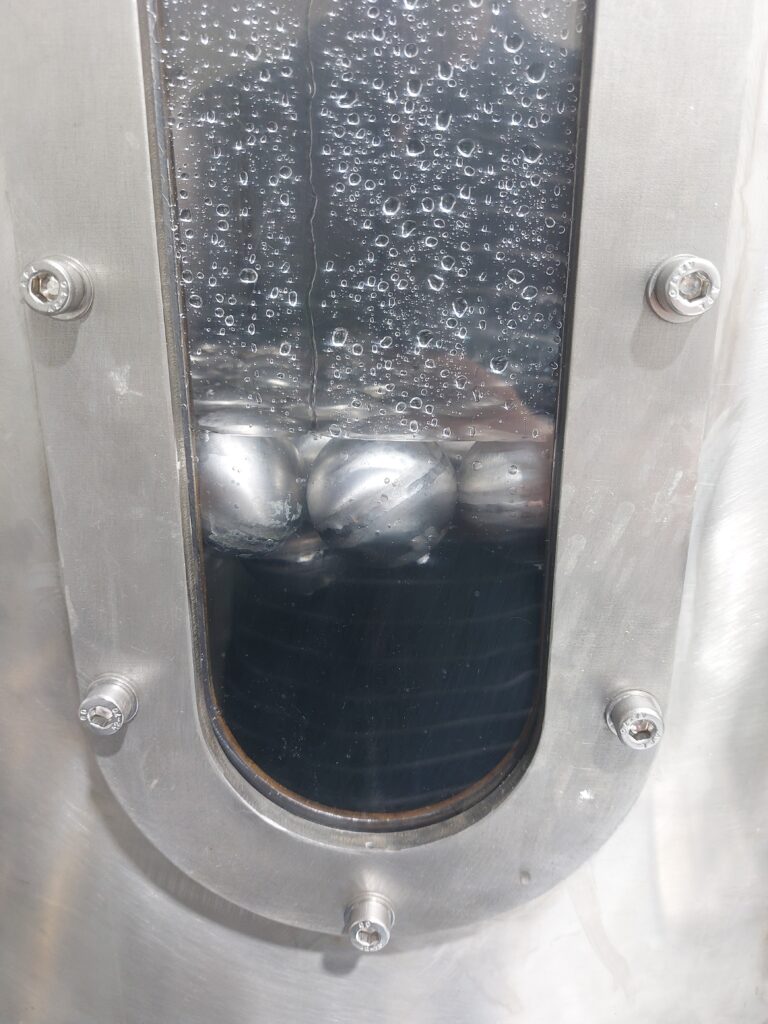
EU-Solaris - floating particles in the 3000 L tank

Floating particles in the 3000 L tank

“These programmes encourage collaboration between institutions and countries, creating opportunities for knowledge exchange, interdisciplinary research and joint European research proposals.“


How would you describe your experience with the EU-SOLARIS ERIC Pilot Access Programme and the support received from the hosting Research Infrastructure?
Overall, the experience was very valuable, both scientifically and professionally. The opportunity to work at CYI allowed me to conduct experimental activities in a specialized research environment and interact with researchers who have relevant experience in thermal energy storage. 

The host team provided a valuable scientific and technical environment throughout the access. As with any experimental campaign, the work completed provided useful results and helped identify aspects that need to be addressed before proceeding with further testing. The programme also made it possible to establish direct scientific contacts and exchange knowledge between research teams from different countries.


What added value did accessing this Research Infrastructure bring to your work?

Access to CYI provided both experimental and scientific added value. It gave me the opportunity to investigate that concept in a specialized thermal energy storage environment, benefit from the host team’s expertise and obtain experimental data under controlled conditions. 

Without access to this infrastructure, conducting the same experimental activities within the planned timeframe would have been considerably more challenging. Equally important was the opportunity to exchange ideas with researchers working in related fields, which helped broaden our perspective on the potential applications and future development of the concept.


In your opinion, how can access programmes such as the EU-SOLARIS ERIC Pilot Access Programme contribute to strengthening research, innovation and collaboration in Concentrating Solar Thermal technologies?

Access programmes such this play an important role in connecting research teams and making specialized experimental infrastructure available to a wider scientific community. 

Concentrating Solar Technologies involve several interconnected research challenges, including thermal energy storage, heat transfer, materials development and system integration. Providing researchers with access to specialized facilities allows them to experimentally investigate new concepts, validate scientific approaches and accelerate the development of innovative technologies. 

Equally important, these programmes encourage collaboration between institutions and countries, creating opportunities for knowledge exchange, interdisciplinary research and joint European research proposals. This is particularly valuable for emerging technologies that require substantial experimental validation before they can progress towards industrial applications.

“I would recommend the programme to researchers and organizations working in Concentrating Solar Technologies and related fields. It provides an opportunity to access specialized research infrastructure that may not be available within an individual institution, while also facilitating direct collaboration with experienced research teams“


Would you recommend the EU-SOLARIS ERIC Pilot Access Programme to other researchers or organisations? Why?

Absolutely. I would recommend the programme to researchers and organizations working in Concentrating Solar Technologies and related fields. It provides an opportunity to access specialized research infrastructure that may not be available within an individual institution, while also facilitating direct collaboration with experienced research teams. Beyond the experimental work itself, the scientific exchange and new contacts established during an access can be equally valuable. In my experience, the programme offers an excellent opportunity to advance research ideas, gain practical experience and develop the foundations for future scientific collaborations.

I would like to express my sincere appreciation to Marios Georgiou and Konstantinos Ilia for their valuable support, close collaboration, and guidance throughout the project and the experimental campaigns.

Interested in EU-SOLARIS Pilot Access Programme?

The EU-SOLARIS ERIC Access Pilot Programme provides users with the opportunity to obtain access to our research infrastructure and the services it offers. Through this programme researchers, industry and other potential users can benefit from a range of resources, including facilities, technical services, equipment, data, expertise, and other forms of support available within the infrastructure.

Access may involve physical or remote interaction with installations and services, depending on the nature of the requested activity. The programme is designed to facilitate collaboration, enable high-quality research and innovation, and broaden the use of the infrastructure by the scientific and technological community.

The Access Pilot Programme is now open. Interested users can find further information about the access modalities, eligibility criteria, and the application process HERE.
EU-Solaris - ACCESS PILOT PROGRAMME 3